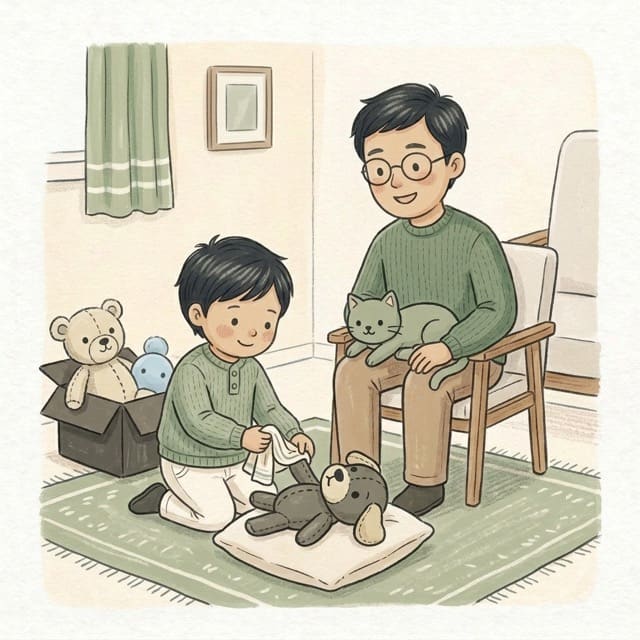
Toy Vet's Surgery
Personal, Social and Emotional DevelopmentCommunication and LanguageExpressive Arts and DesignUnderstanding the World
What you need
- three or four soft toy animals as patients
- a cardboard box as the pet carrier
- a tea towel or a scarf for bandages
- a spoon and a cup for medicine
- a chair for the waiting room
- paper and a crayon for the vet's notes
How to do it
- Set out a chair as the waiting room and a cushion as the vet's bench.
- Bring in a soft toy patient in its box and tell the vet what's wrong: "My dog has a sore paw."
- Let your child look the patient over, listen to its tummy, wrap the paw and give it a spoon of pretend medicine.
- Ask what you need to do to help it get better, then bring in the next patient with a new problem.
Why it matters
Being the vet means listening to a problem, deciding what to do and saying it, all for a soft toy that needs them.
What they're learning
- Playing a role
- Talking and acting like a vet, with a vet's words.
- Caring for others
- Gentle hands and kind words for a patient who is hurting.
- Explaining
- Telling the owner what's wrong and what to do about it.
What to look for
Notice them using words a vet might say, like "Let's have a look" or "Keep him warm".
A tip
Keep the problems small and fixable, a sore paw or a tummy ache, so every visit ends with a happy patient.
Make it easier or harder
Easier: be the vet yourself first and let them bring their own poorly pet to you
Harder: add a receptionist with a pad who takes each patient's name and books them in to come back
More like this

Browse
Quiet & calm activities · Toddler activities with a spoon · Toddler activities with cups · Toddler activities with paper · Toddler activities with a cardboard box · Toddler activities with a towel