Matching Picture Cards
What you need
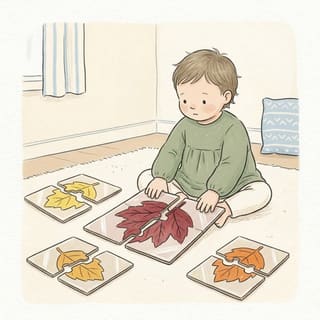
- 6-8 picture cards or two of the same chunky toys
- a flat surface
How to do it
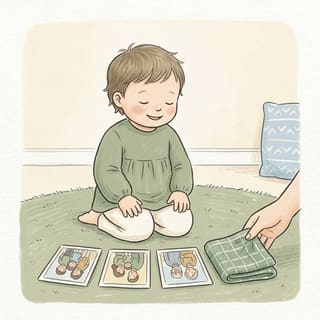
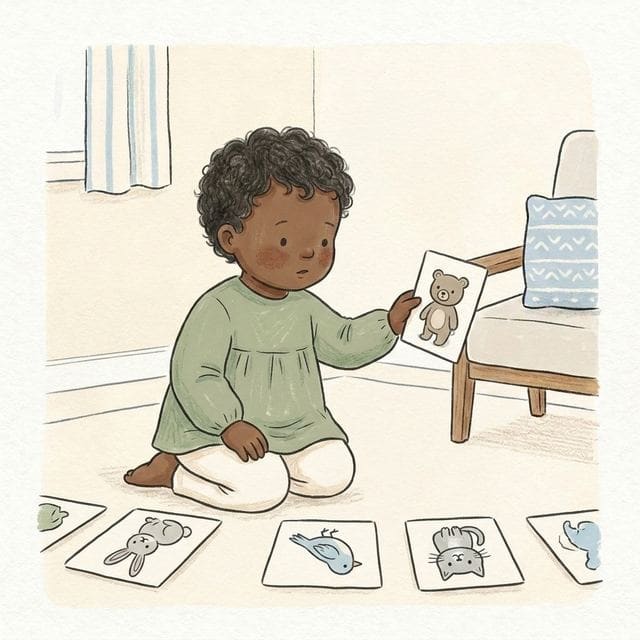
- Lay a few cards face up on the floor
- Hold up one and ask 'can you find the same one?'
- Let them place the match next to it
- Mix them up and try again
Why it matters
Spotting which two pictures are the same trains their eyes to notice small differences, a skill behind reading and later school work.
What they're learning
- visual comparison
- Spotting two identical pictures trains close looking, the same skill that later helps them tell letters apart when learning to read.
- categorising
- Sorting matches from non-matches is early grouping, the base of later maths and science thinking.
- sustained attention
- Sticking with the game past the first match builds the focus needed for longer tasks like homework.
What to look for
Watch for them scanning across all the cards before choosing, rather than grabbing the first one. That's real comparing.
A tip
Photos of family or pets work brilliantly here and keep them far more engaged than generic cards.
Make it easier or harder
Easier: use only 3 very different cards
Harder: turn cards face down for a simple memory match