Helping in the kitchen safely
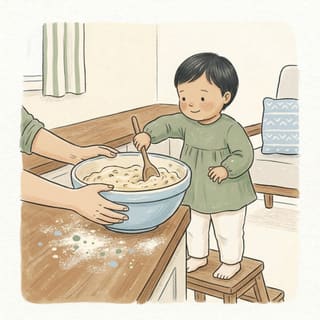
Give them a place to stand
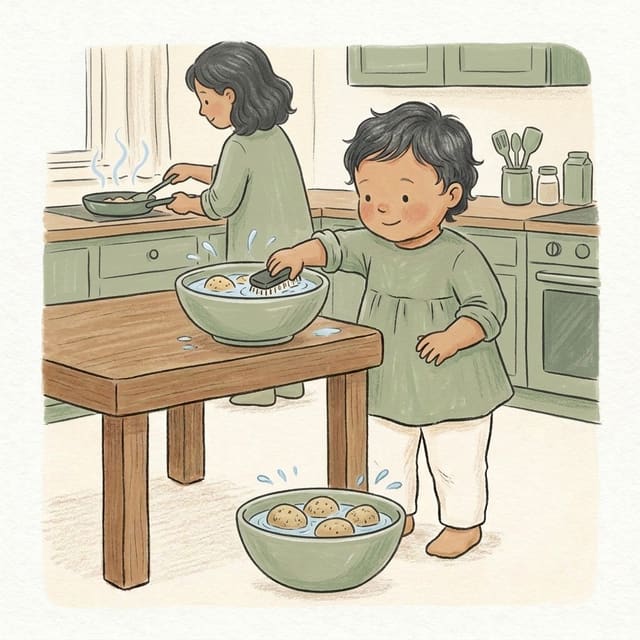
The first decision is where your child is, not what they do. A low table, or a sturdy step with a rail at a countertop, at the end of the run furthest from the stovetop and out of the path between oven and sink. Chairs pulled up to counters are the common setup and the one that tips.
Once they have their own spot with their own bowl and cloth, most of the safety problem is already solved, because they are not reaching across you or arriving at the stovetop unannounced.
Jobs that actually work
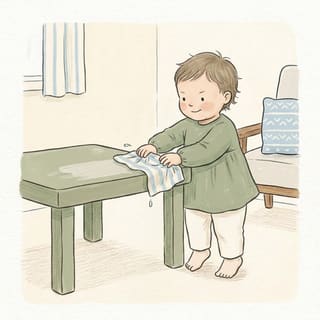
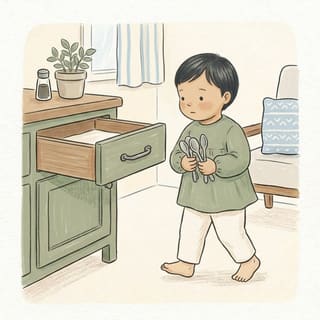
Washing potatoes or salad in a bowl of water. Tearing lettuce, herbs, or bread. Stirring anything cold. Tipping in ingredients you have measured out. Spreading soft butter with a blunt table knife. Mashing. Sprinkling cheese. Carrying unbreakable things to the table and wiping it afterwards.
Children this age are keen on jobs that have a visible end, so a bowl to fill or a table to lay tends to hold them longer than something open-ended. If they lose interest after a minute, that is the job done. Trying to keep them there turns helping into something they were made to do.
The rules that never move
Hot and sharp are yours. Not sometimes, not when they are being careful. Pan handles turned in, hot pans at the back, oven door closed and not leaned on, kettle and its cord pushed right back, hot drinks nowhere near the edge of a surface. Steam from a pan or a just-boiled kettle burns quickly at head height for a small child.
Knives, the food processor blade, the grater and the peeler live somewhere they cannot be reached, and go straight back there rather than sitting on the countertop. The dishwasher is the easy one to forget: load knives point down, and keep the door shut rather than left open to a curious child.
Wash hands before starting, keep raw meat and its board separate from everything else, and wash hands again after touching it. Cleaning products and dishwasher tablets belong in a high cabinet, not under the sink, once your child is standing at a countertop with you. If your child has an allergy, they need to stay away from the ingredient itself, not just the finished dish, because handling and traces count.
When it stops working
If a session is going badly, it is fine to end it. Sending your child off with their own bowl of water and a spoon at the table, while you finish at the counter, is not a defeat; it is how most cooking with a small child actually goes.
Keeping your own pace realistic matters as much as any rule. A parent who is running late and trying to supervise at the same time is the moment things get knocked over, so save helping for the meals where you have a bit of room.
Try this together
Where this comes from
Little Wins guides are general information for parents, not medical or nutrition advice. If you are worried about your child's eating, growth or health, talk to your pediatrician.
More food guides
Browse
Food and mealtimes guides · All guides · Activities · Everyday helper activities · Sensory activities