Getting started cooking together
Start smaller than you think
The first time is not a recipe, it is one job. Tearing lettuce, stirring a cold bowl, tipping in a pre-measured cup of flour, mashing a banana with a fork. Choose something from a meal you were already making, so there is nothing riding on it going well.
Two or three minutes of real involvement is a good first go. Your child may wander off halfway through, come back, then want to do the same step four more times. That repetition is the bit that builds the skill, so let it run if you can spare the time.
Set the scene before they arrive
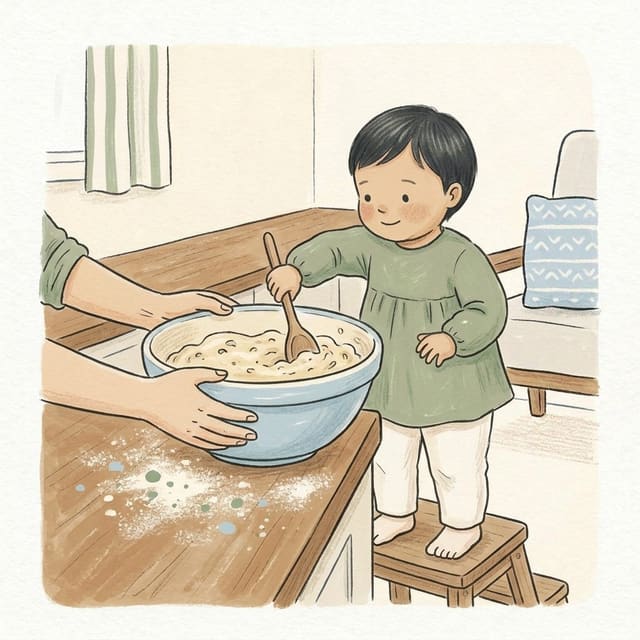
Get everything out first. A child standing at a counter waiting while you find the measuring cup will start exploring the drawers instead. Put them at a low table or on a stable step at a countertop well away from the stovetop, with their own bowl, their own spoon, and a cloth within reach.
Say what is happening as you go: "you stir, I will pour". Clear roles cut down on grabbing. If they want the thing you are holding, having a second identical spoon on the table solves a surprising number of arguments.
Mess and taste
There will be flour on the floor. Putting a towel or a wipeable mat down first turns tidying into a thirty-second job and means you are not correcting them the whole time. Letting them handle, smell and lick raw fruit and vegetables is useful in itself, while raw egg, raw meat and uncooked flour stay out of reach. Children who help with a food often become more comfortable around it, though that does not always follow and is not the reason to do it.
Do not make eating what they cooked the price of the activity. If they make the sandwich and then refuse the sandwich, the cooking still counted.
Tasting as you go is part of it too, within reason. A bit of grated cheese, a slice of pepper, a lick of yogurt off a spoon, all fine to hand over while you work. Keeping a small bowl of something they can eat freely, right next to the bowl they are stirring, saves most of the reaching.
Making it a habit
One short go a week is plenty to start with, and a fixed slot makes it likelier to happen: the same weekend breakfast, or the meal on the day you are least rushed. Cooking together on a Tuesday when dinner is already late tends to end badly for everyone.
Repeat the same job for several weeks rather than finding a new one each time. Children often get more confident at stirring or tearing with repetition, and they like being the one who knows what happens next. Once a job is easy, hand over a slightly harder version of it instead of a completely different task.
If your child has a known allergy, or you are unsure about an ingredient, check with your pediatrician before it becomes a hands-in-the-bowl activity rather than after. Handling and traces count as much as eating, so it is worth settling before the flour is out.
Try this together
Where this comes from
Little Wins guides are general information for parents, not medical or nutrition advice. If you are worried about your child's eating, growth or health, talk to your pediatrician.
More food guides
Browse
Food and mealtimes guides · All guides · Activities · Everyday helper activities · Sensory activities