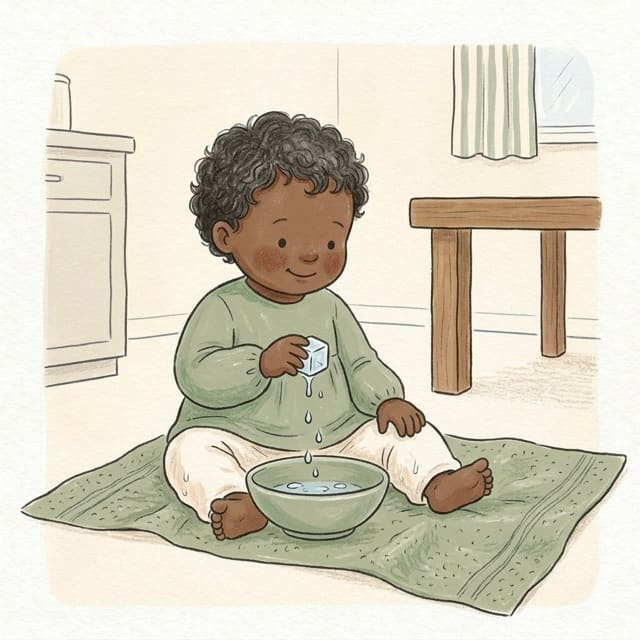
Ice Cube Melt
What you need
- ice cubes
- bowl
- towel
How to do it
- Put a few ice cubes in a shallow bowl.
- Let your toddler touch, hold, and slide them around.
- Wipe hands with the towel as they get cold or drippy.
Why it matters
Feeling something cold and slippery change in their hands teaches toddlers about cause and effect in a totally hands-on way.
What they're learning
- Cause & effect
- Feeling ice turn to water in their own hands teaches toddlers that time and warmth change things, a concept they'll build on with cooking and weather later.
- Sensory tolerance
- Handling something cold and uncomfortable in a safe, short burst helps toddlers build tolerance for new sensations instead of avoiding them.
- Grip & release
- Ice cubes are slippery and force tiny hands to adjust grip constantly, the same skill they'll use holding a slick bath toy or a cup with no handle.
What to look for
Watch for them switching the ice between hands or squeezing it tighter as it gets slippery — that's active grip adjustment, not just holding still.
A tip
Keep the session short — 3-4 minutes is plenty before cold hands turn into a meltdown. Coloured ice cubes (freeze a few berries or drops of food dye in) make it feel extra exciting.
Make it easier or harder
Easier: freeze the ice in a big single block so there's less to drop
Harder: freeze small toys inside the cubes for a mini melt-and-find
More like this
Browse
Sensory activities · Activities for 1 year olds · Activities for 18 month olds · Toddler activities with a bowl · Toddler activities with a towel