Throwing food: what it means and what to do
Why this happens
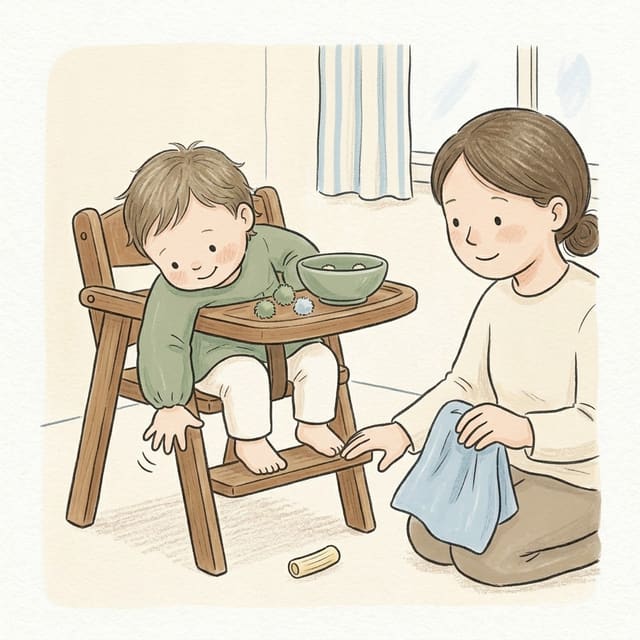
Dropping food off the side of a high chair is an experiment before it is anything else. It falls, it makes a noise, somebody reacts, and it works exactly the same way next time. That is genuinely interesting when you are one.
The second reason is communication. A child who has had enough, or who never wanted this in the first place, may not have the words for it yet, so the plate goes over the side instead. And sometimes it is simply the end of a long day and the meal is the thing that breaks first. None of these mean your child is being deliberately awkward or that mealtimes are going wrong.
What to try this week
Put out less. Three or four pieces at a time, topped up when they are gone, gives you far less on the floor and a natural pause every couple of minutes. A bowl that suctions to the tray helps some children and becomes a new puzzle for others.
Keep your response flat and short. "Food stays on the tray" once, no lecture, no laughing, no gasp. If it carries on, take the plate away without drama and say the meal is finished. Offer the next meal or snack at the usual time rather than immediately, so the pattern stays clear.
Give them another way to say they are done. A wave, a sign, "all finished" said for them each time you lift the plate. Say it the same way every meal, and some children start handing it back to you before the food goes over the side.
Something to throw on purpose elsewhere in the day is worth having too. Beanbags into a washing basket, balls down the hall, socks into a box. It is a genuine urge at this age rather than a bad habit, so it helps to have somewhere it is allowed to go.
What not to worry about
This phase is extremely common and it usually eases, often as language and appetite steady out, though the timing varies a lot from child to child. You have not caused it by being too soft, and picking it up without comment is not rewarding it.
Put a wipeable mat under the chair and stop fighting the mess itself. It is much easier to stay calm about thrown food when clearing it takes ten seconds. A dog under the high chair makes the whole thing far more entertaining, so it is worth shutting them out of the room during meals while you work on it.
When to ask someone
If it happens at every single meal, and your child also seems distressed by eating, gags often, or is not gaining weight, mention it to your pediatrician. The same goes if throwing has arrived alongside a sudden drop in how much your child will eat, rather than your child being their usual cheerful self.
Otherwise, this is a stage rather than a problem, and the main thing you are doing is keeping your own reaction boring while it passes.
Try this together
Where this comes from
Little Wins guides are general information for parents, not medical or nutrition advice. If you are worried about your child's eating, growth or health, talk to your pediatrician.
More food guides
Browse
Food and mealtimes guides · All guides · Activities · Everyday helper activities · Sensory activities