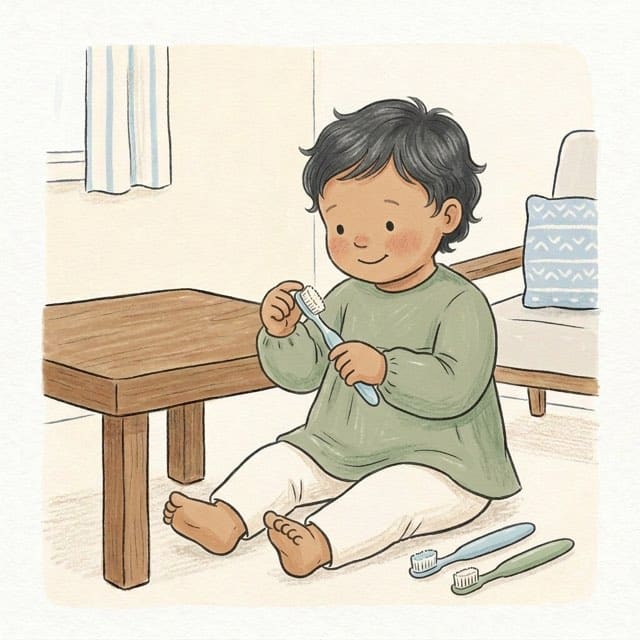
A Different Brush
What you need
- two or three different toothbrushes
- a smear of toothpaste
How to do it
- If your toddler keeps refusing, try a brush with softer bristles or a different handle.
- Let them hold it dry for a night or two with no toothpaste at all.
- Add a smear of paste once the brush itself is accepted.
- If the paste is the problem, try a different one rather than pushing the same one.
Why it matters
A lot of refusing is about how the brush or the paste feels rather than about not wanting to cooperate, and that's a problem you can usually solve by changing the thing rather than winning the argument.
What they're learning
- Getting used to it
- Bristles and mint are strong sensations, and familiarity is what takes the edge off.
- Being listened to
- Changing the brush because they didn't like it teaches them that their no gets a response.
- Having a go
- A brush they'll actually hold is the one that gets any practice at all.
What to look for
Watch for the brush going in more easily after a few nights of just holding it.
A tip
Not liking the feel is a normal reason to refuse, and it passes. If teeth are going unbrushed for a while, a dentist is the person to ask.
Make it easier or harder
Easier: let them hold and chew a dry brush with nothing on it for as long as it takes
Harder: go back to the original brush once a different one has broken the deadlock
More like this
Browse
Everyday helper activities · Activities for 1 year olds · Activities for 18 month olds · Activities for 2 year olds