Drinks, cups and giving up the bottle
Why the change is worth making
The American Academy of Pediatrics (AAP) suggests offering a cup from around six months and finishing the move off bottles sometime between 12 and 18 months. The reasons are practical rather than dramatic. Drinking from a bottle, especially slowly over a long stretch, keeps milk or juice washing around the teeth, which is how early tooth decay, sometimes called baby bottle tooth decay, happens. A bottle also tends to deliver a lot of milk, which fills a small stomach and leaves less room for meals.
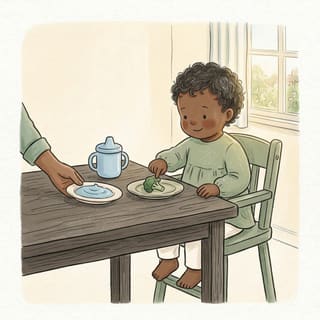
Many sippy cups have a valve under the spout to stop spills, but that means your child has to suck to get anything out, which is just like drinking from a bottle. If you use a lidded cup, pick one with no valve. The AAP says it is healthiest for children to be drinking from an open cup by about age 2.
How to make the swap
Do it one bottle at a time. Start with the one that matters least, often the middle of the day, and offer milk in a cup at that meal instead. Give it a week before you change the next one. The bedtime bottle is usually the last to go because it is wrapped up in the whole bedtime routine, so it helps to move milk earlier in the evening and finish with teeth brushing, then a story. Extra cuddles, songs or an extra book help more than giving the bottle back when there is protest at bedtime.
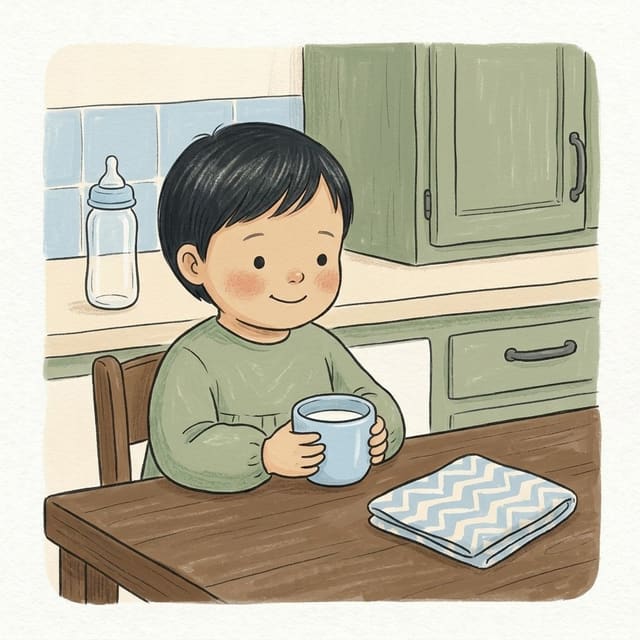
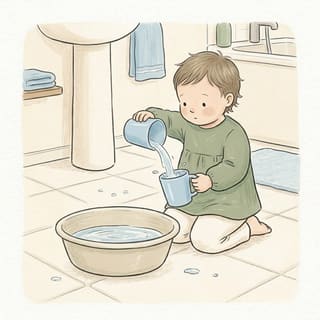
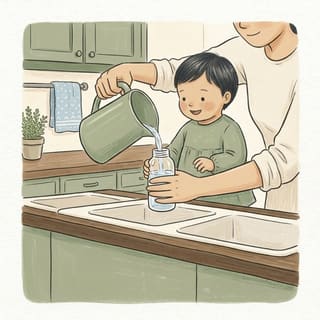
Expect spills. A small amount in the bottom of an open cup, on a wipeable surface, with a cloth already out, keeps this from becoming a source of tension. Pouring and drinking as play at other times of day, somewhere no one minds the mess, takes the pressure off the meal itself.
Some children drop bottles in two weeks and some take much longer, and both are normal. Putting the bottles away out of sight once a feeding has gone tends to help, since a bottle sitting by the sink is an obvious thing to ask for.
What to put in the cup
Water and plain milk cover almost everything a child this age needs. From 12 to 24 months the AAP recommends whole milk, about 2 cups (16 ounces) a day. From age 2, it recommends switching to low-fat (1%) or nonfat milk, about 2 to 3 cups a day. Flavored milk, soda and toddler milk drinks are not needed. Milk and formula belong at mealtimes; in between, offer plain water.
Juice is not needed at all. If you do give it, the AAP advice is 100% fruit juice only, no more than 4 ounces a day for a 2- or 3-year-old, served in an open cup at a meal rather than in a bottle or a sippy cup that makes it easy to sip all day. A child drinking a lot of milk or juice on top of meals is often the one who eats least at the table, so offering milk with a meal rather than an hour before usually helps.
If your child is still very attached to bottles well past 18 months, or you are worried about how much milk they are drinking, your pediatrician can help you plan it. The AAP suggests making a first dental appointment when the first tooth appears and by your child's first birthday, so it is worth booking around the same time as the switch rather than waiting for a problem.
Try this together
Where this comes from
Little Wins guides are general information for parents, not medical or nutrition advice. If you are worried about your child's eating, growth or health, talk to your pediatrician.
More food guides
Browse
Food and mealtimes guides · All guides · Activities · Everyday helper activities · Sensory activities