Burning off toddler energy indoors
Why indoor energy is different
Outside, a child burns energy without anyone organizing it. Inside, they bounce off furniture and each other, and the energy comes out as whining and throwing. The fix is to give them a short, deliberate burst of real movement, ten or fifteen minutes where the point is to get out of breath, and then move to something calm. Guidance from the World Health Organization is that children under five need several hours of active play spread across a day, and a good chunk of that can happen in a hallway.
Timing matters more than the activity. Most families have a slump somewhere between half past three and five. Get the movement in before it, and the rest of the afternoon is easier.
Movement that fits in a small space
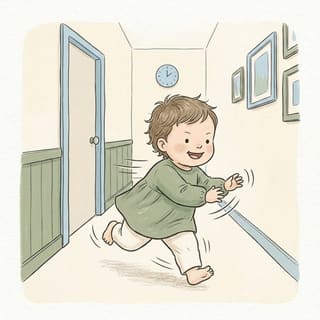
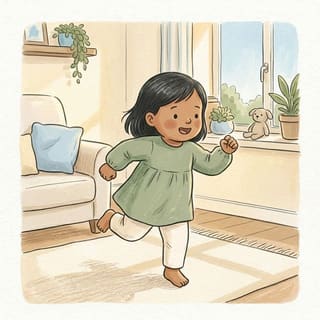
Clear a hallway and race on hands and knees to the end and back. Get down and do it with them. Walk like a bear, hop like a frog, waddle like a duck, and then ask them to pick the next animal. Put music on, dance, stop the music, and everyone freezes. A two year old will play freeze dance until you are the one who wants to stop.
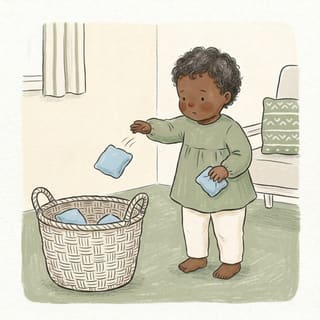
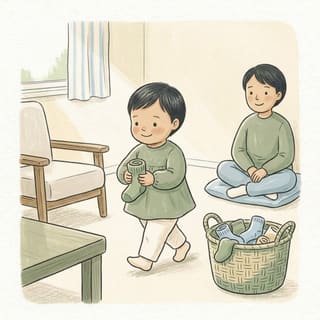
Rolled-up socks and a laundry basket make a throwing game. Stand close to start, then step back a pace each time one goes in. If you have two children, races and freeze dance work with both at once, and the older one usually sets the pace.
Heavy work calms them down
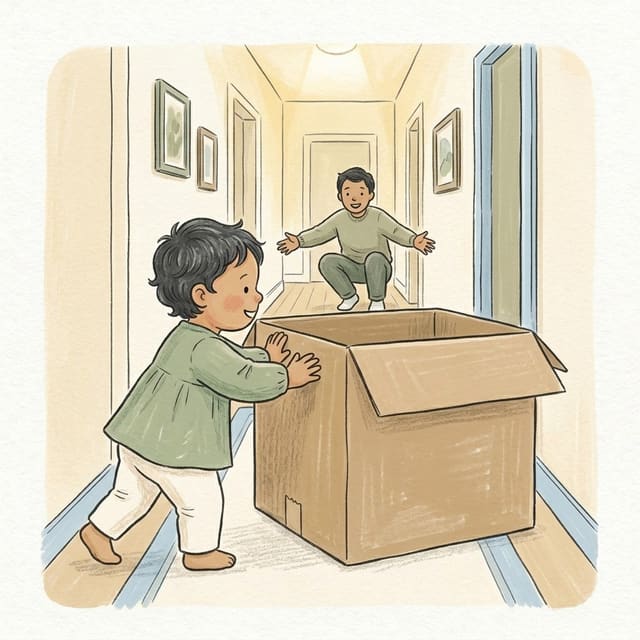
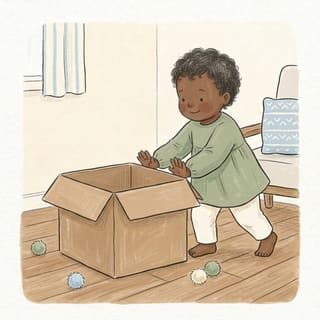
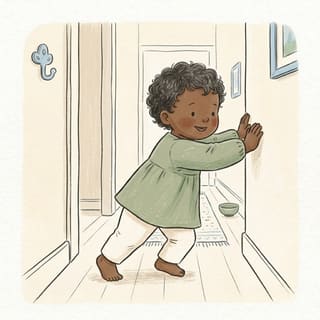
Pushing and carrying something with a bit of weight to it does something that running does not. It settles children. A big cardboard box pushed across the floor, a laundry basket loaded with books and dragged down the hall, or leaning into a wall with both hands and pushing as hard as they can. If you have a child who gets more wound up the more they run, try the heavy jobs first and see if it changes things.
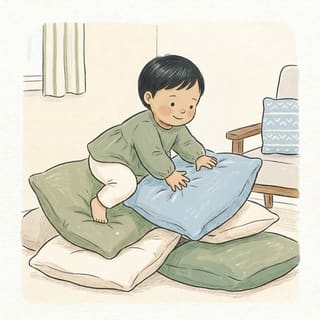
Cushion mountain works both ways. Climbing it is the burst, and building it with all the cushions in the house is the heavy work.
Finishing well
Stop while it is still going well, offer a drink, and move straight to something sitting down. A book, a snack, a tray of something to scoop. The transition is where energy activities usually fall apart, so have the quiet thing ready before you start the loud one. The activities below are the ones that work in a normal-sized room, each with its own page and a switch-up for next time.
Try this together
Where this comes from
Little Wins guides are general information for parents, not medical or nutrition advice. If you are worried about your child's eating, growth or health, talk to your pediatrician.
More play guides
Browse
Play and activities guides · All guides · Activities · Activities for 2 year olds · No-mess activities · Five-minute activities