Eating out without dreading it
Set it up to be short
The version of eating out that works with a young child is quick and slightly early. Arriving at half eleven or half five means a quieter room, faster service, and a child who is hungry but not yet past it. Waiting forty minutes for food at seven o'clock is the thing that goes wrong most often.
Ask for their food to come out first, or at the same time as starters. If there is a wait, having something in your bag to put in front of them straight away, breadsticks, a small pot of fruit, buys you the time everyone needs.
It is also worth a quick look at the menu before you leave the house. Knowing there is something your child will eat, and whether there are high chairs, takes the guesswork out of the door.
At the table
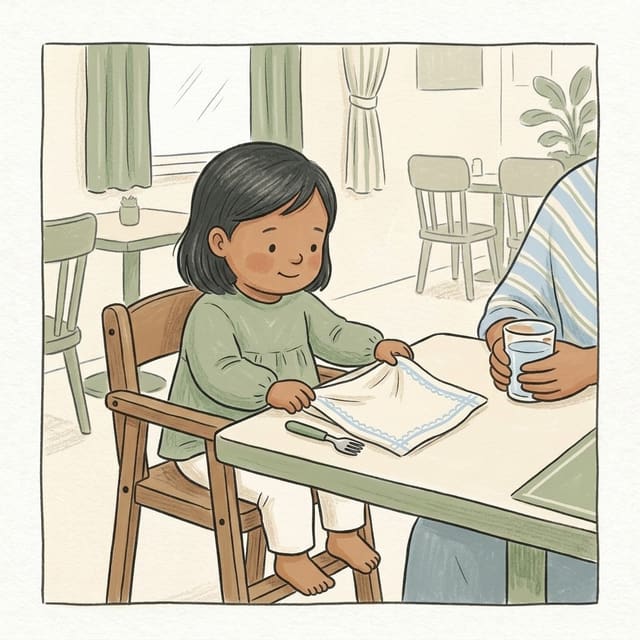
Give your child a job as soon as you sit down. Handing out the napkins, sorting the cutlery, choosing where the water jug goes. It gets them settled into the table rather than staring at the room.
Order something you know they eat, plus one thing from your plate to try. Restaurant food is not the moment for a new texture. Ask for sauces on the side, and be ready for a meal they eat two bites of before wanting to look at the fish tank. That is a normal outcome, not a wasted meal.
Take turns eating. One adult eats while the other is on child duty, then swap. Both of you trying to enjoy a hot meal at the same time is usually how the wheels come off.
When it goes wrong
Leave the table early rather than late. The moment it starts tipping, one of you takes them outside for two minutes. Fresh air and a change of view resets a surprising number of wobbles, and it is far easier than trying to recover a full-blown meltdown in a busy room.
Decide before you go that you are willing to ask for the bill and go home. Knowing that is an option takes most of the dread out of it, and it is far better than sitting it out while everyone gets more upset.
Tell staff about any allergy every single time you order, including the sides and the sauces, however small the place is and however often you have been. Ask rather than assume with chips, dressings and anything fried.
It is also worth lowering what you are expecting of yourself. You will not have a long relaxed lunch for a while yet. What you are doing instead is giving your child practice at sitting at a table somewhere unfamiliar, in small doses, which is the thing that makes the next time easier.
Try this together
Where this comes from
Little Wins guides are general information for parents, not medical or dietetic advice. If you are worried about your child's eating, growth or health, speak to your GP or health visitor.
More food guides
Browse
Food and mealtimes guides · All guides · Activities · Everyday helper activities · Sensory activities