Three Piece Puzzle
What you need
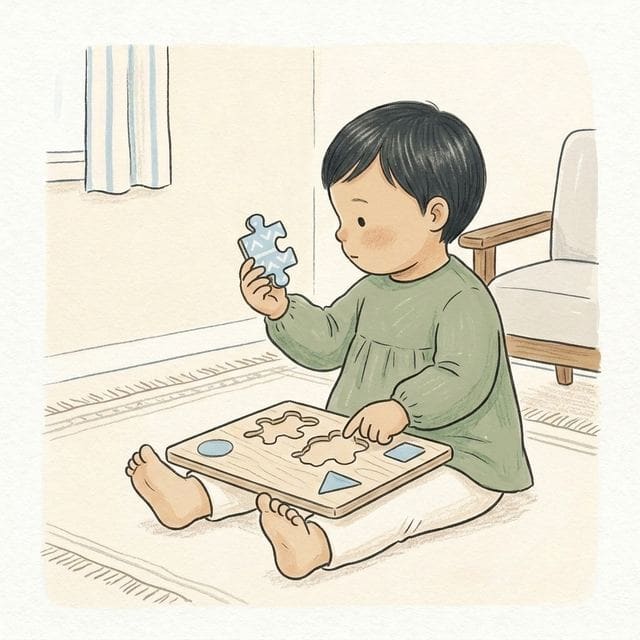
- a simple 3-6 piece puzzle or shape inset board
How to do it
- Tip the pieces out beside the board
- Let them try each piece before you help
- If they're stuck, turn the piece rather than placing it for them
- Cheer the last piece in together
Why it matters
Working out which way a piece turns builds the kind of patient problem-solving they'll use for everything from dressing themselves to schoolwork.
What they're learning
- shape matching
- Spotting which piece fits which gap is the root skill behind reading maps and fitting objects into spaces as an adult.
- trial and error
- Turning a piece round instead of giving up teaches persistence with a small, safe frustration.
- hand precision
- Placing a piece exactly into its slot sharpens the fine control needed later for writing.
What to look for
Notice if they rotate a piece themselves before trying to force it. That's real spatial reasoning kicking in.
A tip
Start with the corner or edge pieces face up and the rest hidden if they're getting overwhelmed by choice.
Make it easier or harder
Easier: use a chunky 3-piece inset board with knobs
Harder: time it and try to beat their own last go