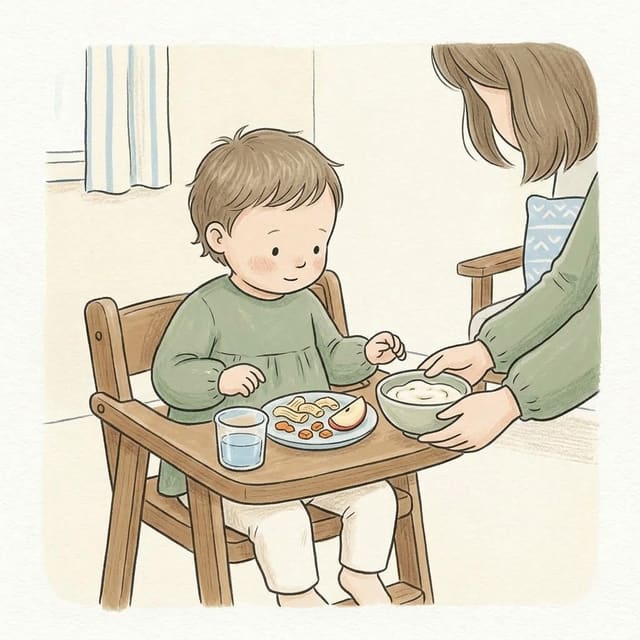
What a good enough day of eating looks like
The shape of a normal day
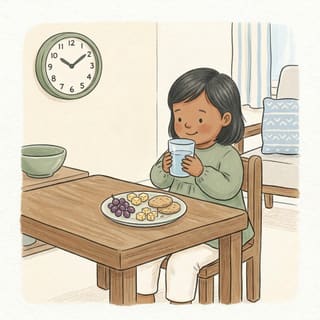
For most children between one and three, the day runs as three meals and two snacks, with water in between and milk once or twice. That rhythm does more work than any particular food, because a child who eats at roughly the same times comes to the table with an appetite instead of half full.
Across the week, the aim is a bit of everything: starchy foods like bread, potatoes, pasta and rice; fruit and vegetables; dairy or a fortified alternative; and protein such as eggs, beans, fish or meat. Young children also need vitamin D, and the NHS advises a daily vitamin D supplement for children aged one to four.
How much is enough
Portions at this age are small. A rough guide is about a quarter to a third of what an adult would eat, or a handful measured by your child's own hand rather than yours. Serving less than you think and letting them ask for more is easier on everyone than clearing an untouched mountain.
Appetite swings enormously from day to day. A big breakfast and almost nothing at dinner, then the reverse tomorrow, is ordinary. Growth comes in bursts, and so does eating. Teething, a cold, a hot day or a short night all flatten appetite for a while.
Whose job is what
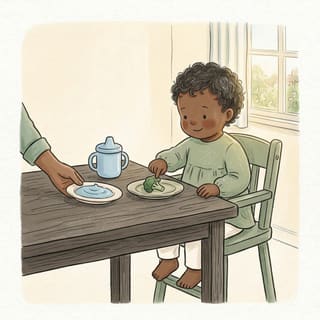
It helps to split the job. You decide what is offered, when it is offered, and where it is eaten. Your child decides whether they eat it and how much. Holding that line takes a lot of pressure out of the room, because you are no longer responsible for getting food into them, only for putting good options in front of them regularly.
That also means an untouched dinner is not a failure on either side. Clear it without comment and keep the next snack at its usual time rather than producing an alternative straight away.
Eating together helps more than most single changes, even if it is only one meal a day and only one adult. Children copy what they see at the table far more readily than they follow what they are told, and sitting down with them also slows the meal to something closer to their pace.
When to ask someone
Speak to your health visitor or GP if your child is losing weight or not gaining, seems tired or low in energy, is avoiding whole food groups, or if you are anxious about their eating. Growth is checked properly against a chart, not by eye, and asking early is sensible rather than fussing.
The same applies if eating has changed sharply rather than drifted, if swallowing looks uncomfortable, or if there is a pattern of tummy trouble around particular foods. Take your red book if you have it, and a rough record of a few ordinary days. Nothing here replaces that conversation, and no website can tell you whether one particular child is eating enough.
Try this together
Where this comes from
Little Wins guides are general information for parents, not medical or dietetic advice. If you are worried about your child's eating, growth or health, speak to your GP or health visitor.
More food guides
Browse
Food and mealtimes guides · All guides · Activities · Everyday helper activities · Sensory activities