Drinks, cups and giving up the bottle
Why the change is worth making
NHS guidance is to move children off bottles and on to cups from around their first birthday. The reasons are practical rather than dramatic. Drinking from a bottle, especially slowly over a long stretch, keeps liquid washing around the teeth, and bottles of milk taken to bed are a well-known cause of tooth decay. A bottle also tends to deliver a lot of milk, which fills a small stomach and leaves less room for meals.
An open cup, or a free-flow lidded cup with no valve, is the recommended step. Valved and spouted cups make the child suck rather than sip, which brings back much of what you were trying to leave behind.
How to make the swap
Do it one bottle at a time. Start with the one that matters least, often the middle of the day, and offer milk in a cup at that feed instead. Give it a week before you change the next one. The bedtime bottle is usually the last to go because it is wrapped up in the whole bedtime routine, so it helps to move milk earlier in the evening and finish with teeth brushing, then a story.
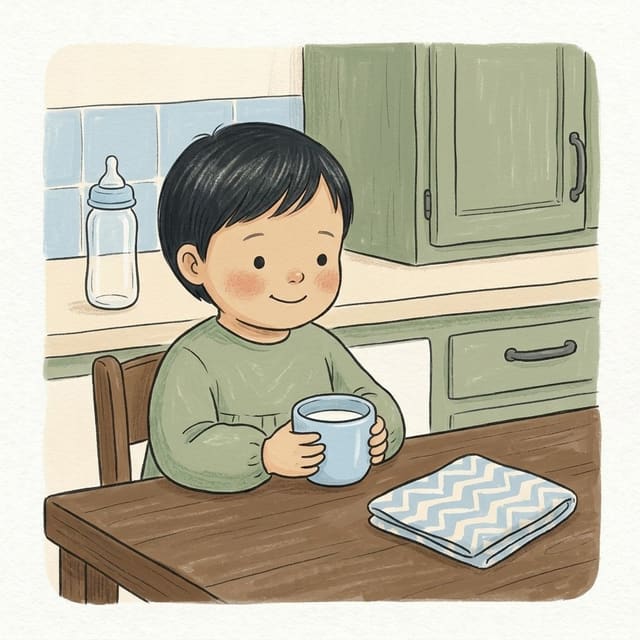
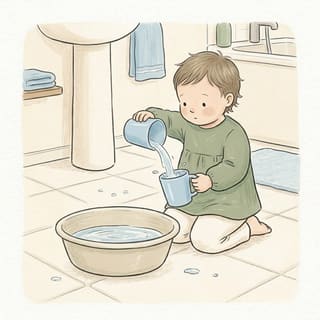
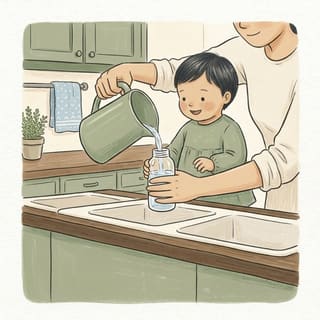
Expect spills. A small amount in the bottom of an open cup, on a wipeable surface, with a cloth already out, keeps this from becoming a source of tension. Letting your child practise pouring and drinking as play at other times of day builds the skill somewhere no one minds the mess.
Some children drop bottles in a fortnight and some take much longer, and both are normal. Putting the bottles away out of sight once a feed has gone tends to help, since a bottle on the draining board is an obvious thing to ask for.
What to put in the cup
Water and whole milk cover almost everything a child this age needs. Full-fat cows' milk is suitable as a main drink from twelve months. Juice, squash, flavoured milk and fizzy drinks are not needed, and sipping them through the day is hard on teeth. If you do give juice, the usual advice is to dilute it heavily, keep it to mealtimes, and serve it in a cup rather than a bottle.
Roughly three servings of dairy a day covers most of what a child this age needs from milk, so a child drinking large amounts of it on top of meals is often the one who eats least at the table. Offering milk with or just after a meal, rather than an hour before, usually settles that.
If your child is still very attached to bottles well past their second birthday, or you are worried about how much milk they are drinking, your health visitor can help you plan it. Dentists see children from their first teeth, so booking a routine check is worth doing at the same time as the switch rather than waiting for a problem.
Try this together
Where this comes from
Little Wins guides are general information for parents, not medical or dietetic advice. If you are worried about your child's eating, growth or health, speak to your GP or health visitor.
More food guides
Browse
Food and mealtimes guides · All guides · Activities · Everyday helper activities · Sensory activities